How Hard Is It to Learn Trumpet — 5 Useful Facts Beginners Should Know

People always ask, “How hard is it to learn trumpet?” Learning the trumpet IS exciting, but NEVER simple. The truth is, it is doable, but it takes patience and steady effort.
From day one, you’ll learn that lip strength builds slowly over MONTHS, not days. Air control is harder than it looks. Neighbors will hear you — this horn hits 95+ dB inside a room. Notes feel slippery and squeaky at first, and many beginners complain it’s a slow grind. Still, most teachers remind us that even 15 minutes a day beats any weekend marathon.
So trumpet is demanding — you’ll sweat, squeak, and get frustrated — but when the sound opens up, it pays off!
Quick Take — Why Trumpet Feels Tough Early
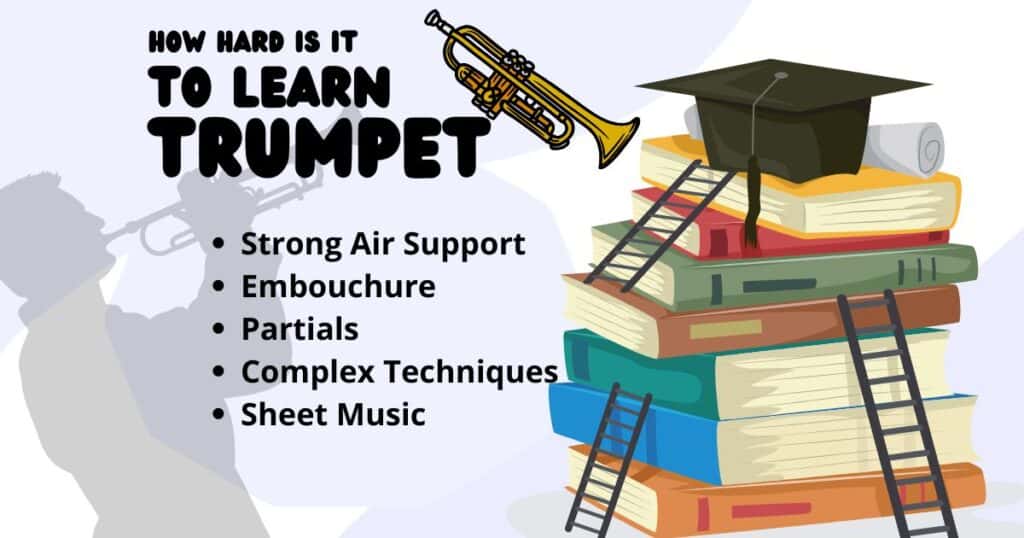
So, how hard is it to learn trumpet? Honestly, pretty tough at first — no sugarcoating here. The tricky parts are air support, embouchure (the lip/mouth shape that feels suuuper awkward at first), and partials — same fingering but different notes. Reading notes while wrangling all that? Yeah, “brain overload”…
And the kicker is that you can NOT brute-force it with a single “all-day weekend” practice. Short, daily sessions (10–15 minutes) beat marathon blowouts every time!!
One beginner said, “Took me months just to get clean notes.” Stick with it, though — the first wins feel amazing! Get your first “B Flat Trumpet Fingering Chart PDF“!
If you’re asking how hard is it to learn trumpet, here’s the first truth: strong air support is non-negotiable.
Fact 1 — Strong Air Support Is Non-Negotiable
Air moves the sound, lips just start it (most teachers love to say that). Weak air = thin tone, cracked notes, embarrassed face…
Posture drives airflow, too. Slouch, and your ribcage collapses (bye-bye airflow). Stand tall, expand ribs, think “warm air.” The goal is control — play loud without blasting, soft without dying. That’s way harder at the start. Holding 8 seconds in your first week will make your lips shake like crazy!
Try this 10‑minute daily routine:
- 3× one‑minute long tones — soft to medium.
- 1× lip‑slur set. Read more about “7 Proven Trumpet Lip Slurs Exercises PDF“!
- 2× one‑minute rest.
Strong air = strong sound. Without it, the horn feels impossible. With it, endurance and tone finally make sense.
Noise is real — trumpet hits 80–100+ dB (neighbors WILL hate you). Apartment hack: use a practice mute or schedule around quiet hours.
Pro tip: Beginners over-tighten their face instead of breathing deeper. Do NOT choke the sound — focus on airflow first.
Quick Drill — Long-Tone Ladder
One drill teachers love to push— the long-tone ladder. Yeap, it is boring at first, but it’s the “secret sauce”. Hold a note, climb up step by step, then come back down. Simple, but it builds air, chops, and confidence fast!!
Here’s how to break it down for total beginners (trust me – you WILL sound like a duck the first time):
- Day 1–2: Hold each note for 5 seconds (start at low C). Rest 10 seconds — 1:2 ratio, always.
- Day 3–4: Push to 7 seconds per note. Still rest double after each try.
- Day 5–6: Hold 10 seconds. Keep resting at 20 seconds (you’ll need it).
- Day 7: Stretch it — 12–15 seconds tops. Rest for at least 30 seconds.
Important stuff you don’t wanna skip:
- Start quietly.
- Do NOT sprint up the notes — one step at a time (patience > ego).
- If your lips buzz out — that’s normal. Take a break, drink water, relax your jaw.
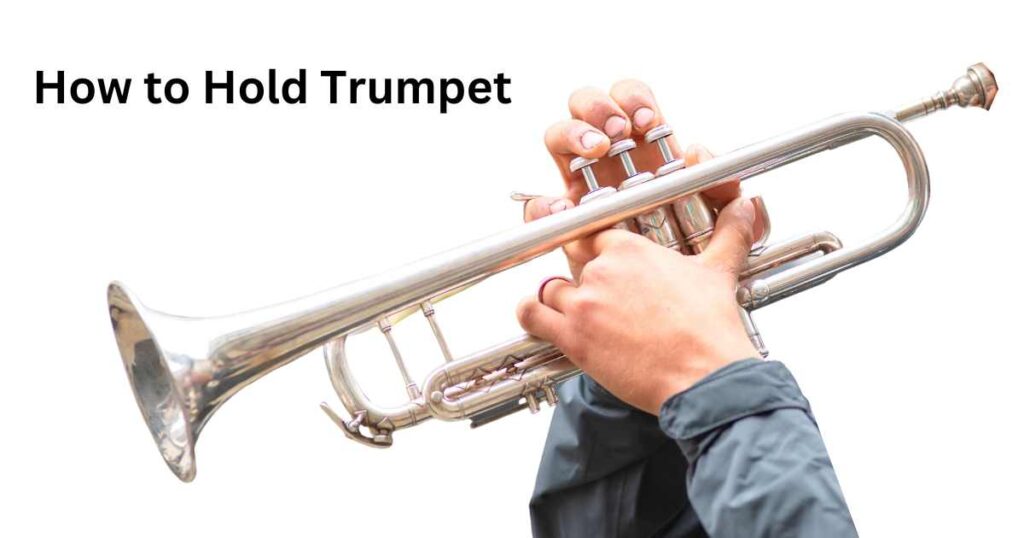
- Keep your horn tilted slightly down. Learn more about “How to Hold a Trumpet Like a Pro“!
- Short daily sessions only — quality beats time.
This drill feels simple, but it develops endurance, sound, and control. Breath comes before embouchure tweaks — reddit folks say faster air, NOT more air, fixes sagging notes. Stick with it, and you’ll see results before you even ask again how hard is it to learn trumpet.
Fact 2 — Embouchure Takes Months To Build
Learning trumpet embouchure is like “leg day” — for your face muscles! Tiny lip muscles tire out way faster than most beginners think. Expect short bursts before those muscles turn to jelly (at your first sessions, you’ll be wiped). But that’s normal — do NOT shame your progress!
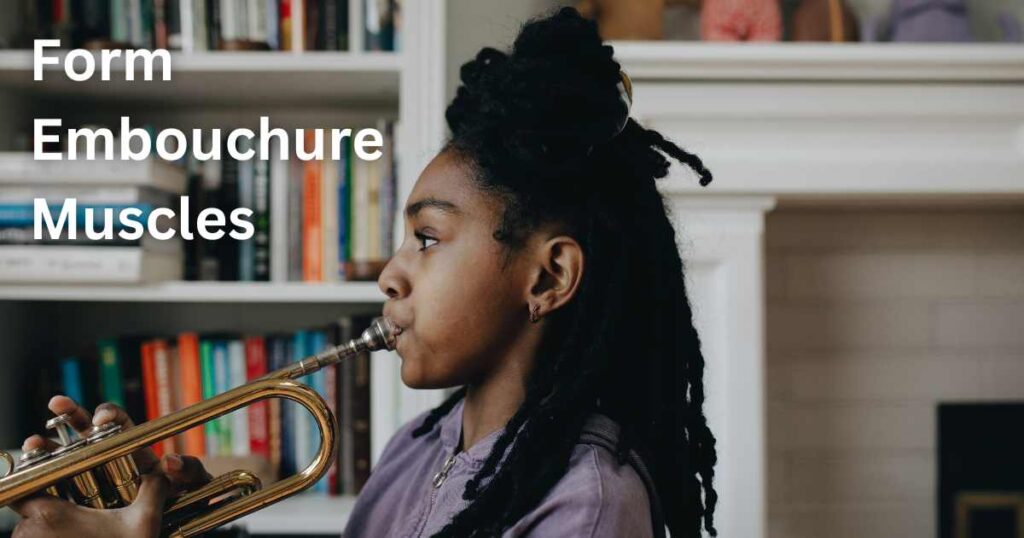
Most beginners press the mouthpiece too hard (swollen lips — no joke) or too light with air leaks and zero sound. Safe pressure means sealing the lips lightly, not squashing them — “say M, relax the center” and “don’t clamp the corners”.
If cheeks puff or you smile when you play, restart — steady face wins. Never chase high notes with mouthpiece tricks or wild embouchure experiments — that’s a common myth. Always hydrate, skip too much lip balm, and take breaks.
Progress is a marathon, not a sprint — even pros post about slow but steady gains.
Timelines are real! “Reliable” tone takes at least 3-6 months for beginners, more for deep strength. Don’t rush — stamina develops slowly (over months, not days). To prevent “overuse”, listen for swelling or buzzing — use them like stop signs to rest.
Fact 3 — Notes Don’t “Click” Instantly (Same Fingering ≠ Same Pitch)
Here’s the tricky part of how hard is it to learn trumpet — pressing valves does NOT give one note. Same fingering → several notes. Which pitch comes out depends on lips (embouchure), air speed, and even tongue shape. Think of it like climbing a staircase — the valves stay the same, but you choose the step with air/lip control.
Open valves (no fingers) give you this stack: C G C E G
That’s the harmonic ladder. Beginners often miss steps with lots of squeaks, cracked notes, weird high honks. Once again — that’s totally normal! Progress IS slow… You don’t unlock notes overnight — it’s months of daily grind.
Best plan: Aim for consistent G–C on open valves. Most beginners will still only hit G half the time! But squeaks aren’t fails — they ARE proof you’re wrestling with the “staircase”. And yeah, neighbors hate squeaks — practice in a friendly window, grab a mute, or pick a back room.
Fact 4 — “Simple” Techniques Feel Complex At First (Slurs, Tonguing, Warm-ups)
The so-called “simple” basics — Lip Slurs, Tonguing, Warm-ups — feel anything but simple at first.
Lip Slurs (or flexibility training in some method book) are brutal early on. Moving smoothly between notes without valves feels too much. Your first clean one takes weeks!! Schlossberg drills focus on this skill, and they’re exhausting but powerful.
Tonguing feels just as weird. Saying “tah/da” into a horn (sounds goofy, I know) doesn’t click until your tongue learns the spot behind the teeth. Arban’s book is the go-to here, later adding double/triple tonguing. Most teachers say to keep the tongue arch high to push the range — without crushing lips.
Find even more advanced exercises in my “Double Tonguing Trumpet Exercises PDF“!
Warm-ups may feel boring, but skipping wrecks your chops fast (cold lips = dead sound). A quick 15-minute template works — 3 min breathing (try wedge breath), 5 min long tones, 5 min lip slurs, 2 min light tonguing. Clarke covers finger speed once tone stabilizes. And do NOT chase speed—tone first, tempo later.
Fact 5 — Sheet Music Looks Simple, But It Isn’t
The sheet music part is sneakier than it seems. The C major scale trips beginners. On trumpets, written C actually sounds as B flat (that transposing thing confuses people a LOT). Plus, the scale needs correct partials, steady breathing, and clean articulation.
Check out my “B Flat Trumpet Scale Sheet – Printable PDF“!
Sight-reading brings extra nerves. Keeping a steady tempo while guessing pitches is rough. Breath marks keep phrases alive. Forget one, and the music falls apart. Panicking in your first recitals is another norm — you either play wrong notes or forget to breathe.
Use tools that help! Metronome (set slow first), tuner, slow‑down apps. Count out loud, even just “1‑2‑3,” because counting to 3 well is harder than it sounds.
Do a “read‑once, fix‑once” drill — sight‑read once, only fix the one biggest trip. If your tone becomes too thin, return to long tones. Miss partials — slip in lip slurs.
How Hard Is It to Learn Trumpet — Level-By-Level Expectations — How Long Until You Sound “Good”?
People always ask how hard is it to learn trumpet? The answer — it depends on time, chops, and practice. But here are some REAL and honest checkpoints:
- Beginner (3–6 months, 15–20 min/day)
You’ll buzz, hit notes in C major scale, and play super easy band charts. (like “Hot Cross Buns” ) Tone is shaky, with the range sitting low (G on the staff). A teacher here makes a HUGE difference as they fix bad habits early. - Early-Intermediate (1–2 years, 30 min/day)
You manage simple jazz/blues heads, band music, and etude books (Clarke studies, yes, at turtle tempo). The range extends to C above the staff if you’re practicing steadily. Plateau risk! Some people get stuck here for years without feedback. - Solid Intermediate (2–3 years, 45+ min/day)
You feel “solid” in a band or group — you SHOULD celebrate this stage! Range: D–E above staff. You’re sight-reading, playing duets, maybe even tackling first legit solos (Arban’s, easy Haydn). Most players feel good enough here. - Advanced Foundations (4–6+ years, daily grind)
This is where endurance, flexibility, and style matter. You start touching the upper register (G above staff and higher), build stamina for full rehearsals, and develop real sound character.
Realistic Answer to “When Do I Sound Good?”
Most beginners sound “musical” in year two with regular practice (30+ minutes daily). By year three, you’re usually band-ready and comfortable. Past that, progress depends on goals (casual hobby vs. pro path).
Community horn players online often say: It takes 2–3 years to feel like ‘I can actually play.” That’s with consistent effort, patience, and (maybe) a teacher who calls out your mistakes before they stick.
Conclusion – How Hard Is It to Learn Trumpet
So, how hard is it to learn trumpet? Short answer — it is hard, but in a good way. You’ve got to juggle breath control (steady air, steady notes), embouchure (lips + face muscles working nonstop), and note accuracy (the right partial, not the squeak zone). Add in technique (tonguing, slurs, range building) and reading sheet music. And yeah — it’s a climb!
But hard does NOT mean impossible — keep telling yourself that all the time. Small daily practices build muscle and ear strength. Tools help too — teachers guiding you, simple routines, a good mute for practice, and warm-ups (buzzing, long tones, lip slurs) make the grind manageable.